
The Annual Allowance (AA) is one of the most misunderstood parts of the NHS Pension Scheme, and one of the main reasons doctors and consultants face unexpected tax bills.
You may assume it relates to how much you contribute, but it doesn’t.
It’s based on how much your pension grows each year.
This guide explains how it works, why it catches people out, and what you can do about it.
What Is the Annual Allowance?
The Annual Allowance is a limit on how much your pension can increase in value in a tax year before a tax charge may apply.
Current limit: £60,000 per year
Based on growth, not contributions
Different to conventional workplace pension which is based on contributions
This is why NHS pensions behave very differently from private pensions.
How NHS Pension Growth Is Calculated
Your pension growth (called the Pension Input Amount) is calculated by:
Looking at your pension value at the start of the year
Looking at your pension value at the end of the year
Adjusting for inflation
Measuring the increase
That increase is then tested against the £60,000 Annual Allowance.
Why this causes problems
Your pension growth can increase due to:
pay rises
promotions
extra sessions (PAs)
inflation adjustments
Even if your take-home pay hasn’t changed much
Real Example (Consultant Case)
Here’s a simplified example based on a real consultant scenario:
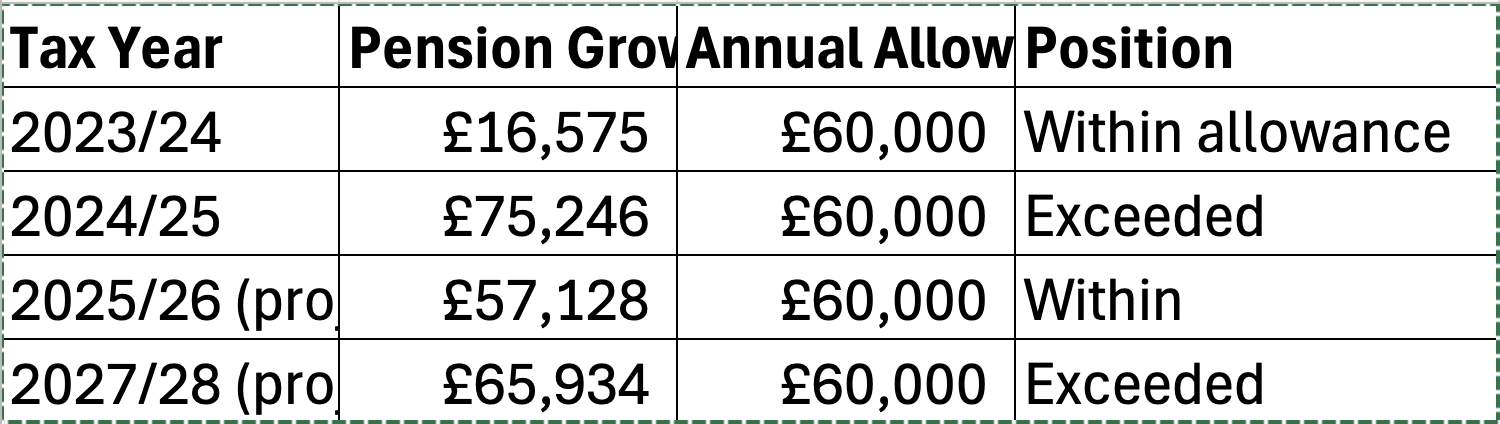
In 2024/25, pension growth exceeded the allowance by over £15,000
This creates a tax charge, even though no extra cash was received.
What Happens If You Exceed the Annual Allowance?
If your pension growth exceeds the allowance:
the excess is added to your taxable income
you pay income tax on it
this can result in large, unexpected tax bills
Especially for senior consultants
Carry Forward (important)
You can use unused allowance from the previous 3 tax years.
This can reduce or eliminate a tax charge—but:
it’s not automatic
it must be calculated carefully
many people don’t realise they’ve already used it
How to Reduce NHS Pension Tax Charges
There’s no one-size-fits-all solution, but common strategies include:
1. Adjusting Work Patterns
Reducing sessions (PAs) can reduce pension growth.
Dropping one PA could reduce pension growth to near zero in a future year
But, it will reduce long-term pension income
2. Using Scheme Pays
Instead of paying the tax yourself:
your NHS Pension Scheme pays it for you
your future pension is reduced
You pay interest on the outstanding amount
This spreads the cost over time
3. Planning Retirement Timing
When you take your pension affects:
growth
tax exposure
total benefits
Small timing changes can have large financial impacts.
4. Scenario Analysis
The most effective approach is:
modelling different scenarios before you make decisions
This allows you to:
see future tax exposure
compare options
avoid surprises
Why This Matters
The NHS pension is extremely valuable but:
tax can reduce that value significantly
decisions are often made without full visibility
small changes can create large outcomes
Most clinicians only realise this after receiving a tax bill
Final Thought
The Annual Allowance isn’t just a tax rule, it’s a key part of your overall pension strategy.
Understanding it properly can mean:
avoiding unnecessary tax
making better career decisions
protecting your long-term retirement income
Get Your NHS Pension Calculation
At Your NHS Pension, we provide:
clear pension projections
Annual Allowance calculations
scenario modelling
So you can understand:
your current position
your future tax exposure
your best options
